Ask a question

Guide 02 ยท Choosing

How to Choose a CBD Product: First Format Guide

Pick the format first. Then the product.

Oils, capsules, gummies and topicals compared on the things a beginner can actually check, plus the spectrum question and the budget questions worth asking. No product picks, no prices.

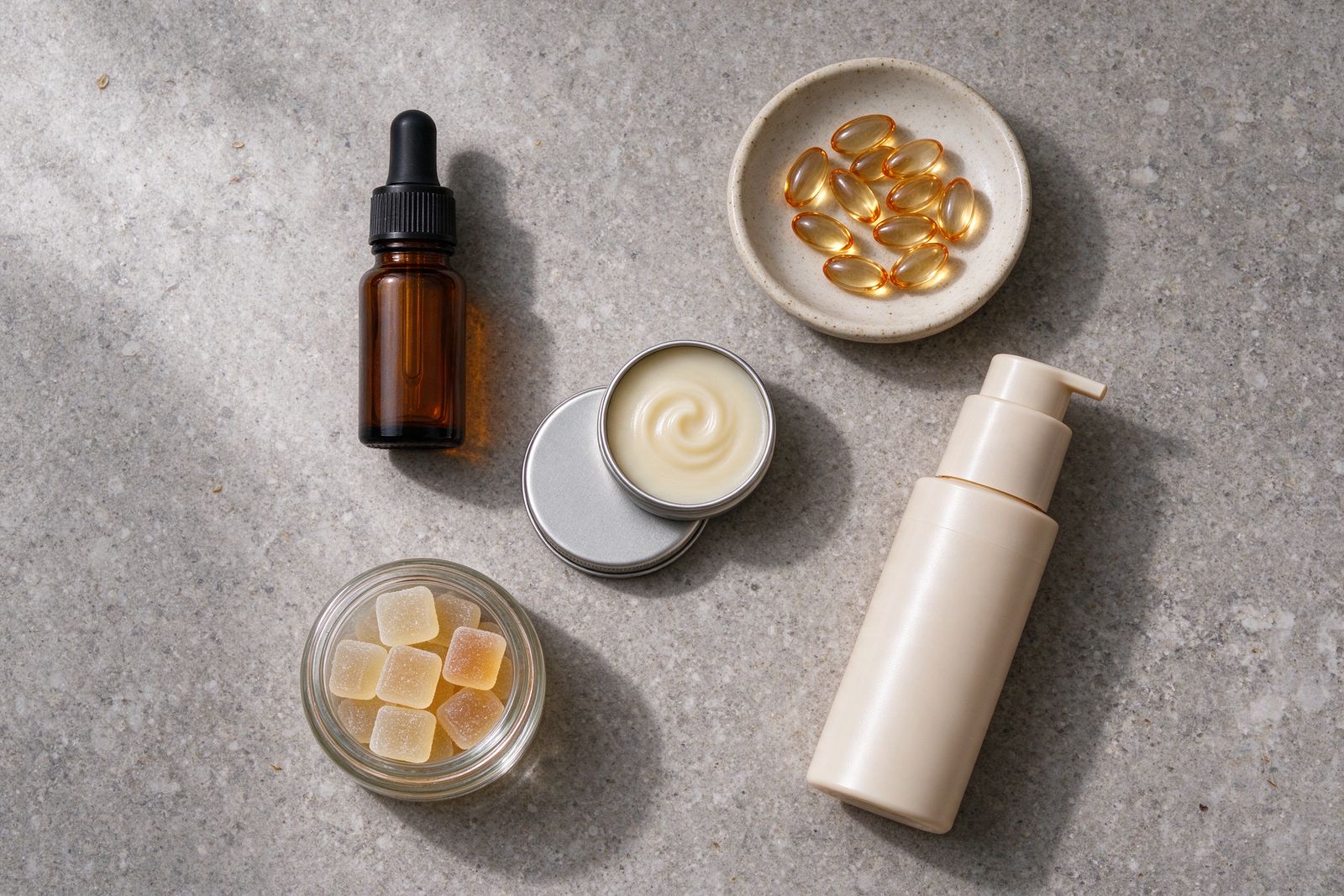
Unbranded CBD product formats on a stone surface: a dropper bottle, softgels, a balm tin, gummies and a pump bottle

Most beginners start by comparing brands. It works better the other way round. Decide which format suits your day, decide whether THC matters to you, and only then compare products, because a comparison only means something when the products share a format and a spectrum type. This guide walks through those two decisions and finishes with the budget questions to ask before you pay. It does not recommend products or tell you how much to take; for that, follow the label and ask your doctor or pharmacist.

Start With How You Will Actually Use It

The format decides three practical things: how the product gets into your body, how easy it is to follow the serving on the label, and what else you swallow or spread along with the CBD. Use the short tool below to narrow the field to one or two formats worth reading about.

How would you like to take it?

How would you like to take it?

How do you feel about measuring?

How do you feel about measuring a serving?

Do you need to avoid THC?

Do you need to avoid THC, for example because of drug testing?

Pick an answer above and a short list of formats to read about will appear here.

Formats compared on what a beginner can check
FormatServingLabel mathWatch for
Oil or tinctureMeasured with a dropperNeeds mg per mL and dropper sizeCarrier oil, flavoring, hemp seed oil confusion
Capsule or softgelPre-measuredSimple: mg per capsuleGelatin or other animal-derived shells
GummyPre-measuredSimple: mg per pieceSugar, sweeteners, storage away from kids and pets
Balm or lotionApplied to skinOften unclear per useFragrances, essential oils, skin reactions

Then Settle the Spectrum Question

Every CBD product falls into one of three rough groups, and the group matters more than the brand. Full spectrum keeps a range of compounds from the hemp plant, including small amounts of THC within the legal limit. Broad spectrum aims to keep that range while removing THC, though "removed" usually means reduced below what the lab can detect. Isolate is CBD on its own.

None of these terms has a legal definition, so a label claim is where checking starts, not where it ends. Open the certificate of analysis and look at the THC line. If the product says broad spectrum or isolate, you want to see THC reported as not detected, along with the lab's detection limit. Our label and COA guide shows where that line sits on a typical report.

you face workplace, military or sports drug testing

research isolate or broad spectrum with THC not detected on the report, and read the drug testing guide. Understand that no product can promise a clean test.

you want to avoid THC for personal reasons

isolate gives the simplest answer. Confirm the THC result batch by batch.

trace THC is not a concern and the law where you live allows it

all three types are open to you. Compare like with like: full spectrum against full spectrum.

you are not sure which applies

settle it before you shop. It is the one decision that changes which products are even on your list.

Budget questions

Six questions that protect your budget

No prices here, because they change constantly and vary by state. These questions work whatever the number on the tag.

  1. 01

    What is the cost per milligram?

    Divide the price by the total milligrams of CBD in the container. It is the only fair way to compare a small bottle with a large one in the same format.

  2. 02

    Does the price come with a current lab report?

    A low cost per milligram is meaningless without a batch-matched certificate of analysis. Value starts with proof of what is inside.

  3. 03

    Is a smaller first size available?

    A first purchase is partly a test of whether the format suits you. A smaller container limits what you spend finding that out.

  4. 04

    Am I signing up for a subscription?

    Read the checkout carefully for auto-renewal, and be wary of "free trial" offers that require a card. Know how to cancel before you buy.

  5. 05

    What is the return or refund policy?

    Many sellers do not accept returns on opened products. Find the policy in writing before you pay, not after.

  6. 06

    Can it legally ship to my state?

    State rules differ and are changing. A reputable seller states where it ships and why it might not. Check current federal and state rules too.

Read the Rest of the Label Before the Front

The front of the box is the marketing. The back is where the decisions are. Before comparing two products, find the same five facts on both: total CBD per container, CBD per serving, serving size, spectrum type and batch number. Then check the full ingredient list, especially for gummies and topicals, where sweeteners, fragrances and botanical extracts can outnumber the CBD. If one product hides any of these facts, the comparison is already over.

A common trap

Two oils both say "1,000 mg" on the front. One is a 30 mL bottle, the other 60 mL. Per milliliter, the first holds twice as much CBD. Always do the per-serving math from the back panel, never from the headline numbers.

Questions to Ask the Seller

A good seller answers in writing and links to documents instead of describing them. Ask where the hemp was grown, which lab tested the batch, whether that lab is independent of the brand, and where to find the report for the batch number printed on your package. Ask whether the product is full spectrum, broad spectrum or isolate, and how the THC result was reported. A seller who answers a question about lab results with a story about wellness has answered a different question.

When to Pause the Purchase

  • The product page claims to treat, cure or prevent a disease.
  • There is no batch number, or the lab report cannot be found for it.
  • The THC result is missing from a product sold as THC-free.
  • The seller suggests a dose for a health condition.
  • You take prescription medication and have not yet asked your doctor or pharmacist.

Any one of these is reason enough to wait. When you are ready, the beginner checklist turns this guide into boxes you can tick, and the storage guide covers what to do once the product arrives.

Questions

Questions about choosing

Which CBD format is best for a beginner?

There is no single best format. The right one is the one that fits your routine and that you can read the label for easily. Pre-measured formats such as capsules make the label math simpler; oils give more control but need careful measuring.

Is full spectrum better than isolate?

They are different, not ranked. Full spectrum keeps more hemp compounds, including some THC. Isolate is CBD on its own. If THC is a concern for you, for example because of drug testing, that usually settles the choice.

How do I compare value without knowing what a fair price is?

Divide the price by the total milligrams of CBD in the container to get a cost per milligram, then compare products in the same format with current lab reports. A low cost per milligram means little if the batch has no lab report.