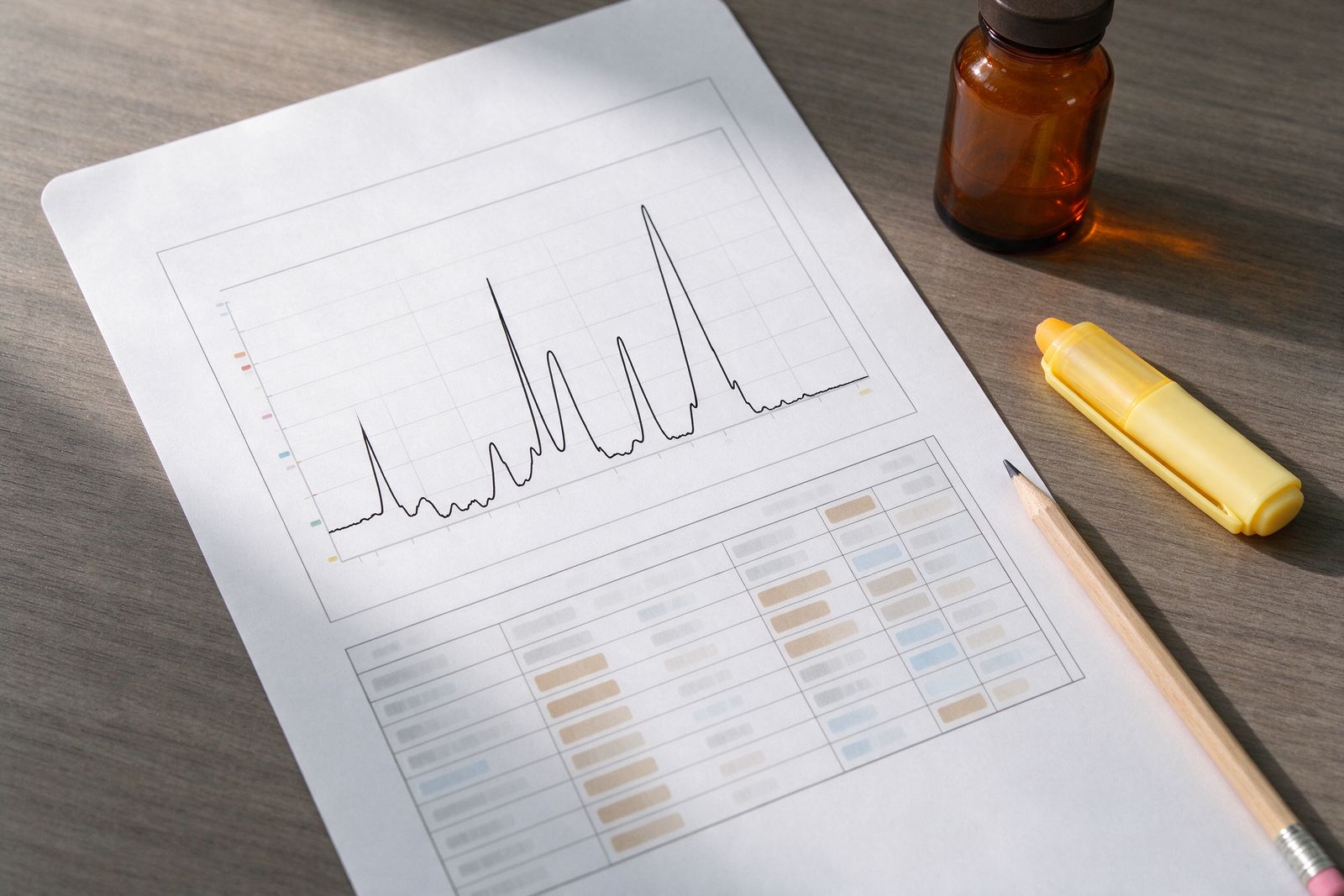
Reading a CBD product properly takes two documents: the label on the package and the certificate of analysis (COA) from the lab that tested that batch. The label makes claims. The COA is supposed to back them up. The skill a beginner needs is not chemistry; it is matching. Does the report describe this exact batch, and do its numbers agree with the box? This guide shows where to look and what to compare, using a sample report you can click through below.
Start With the Five Facts on the Label
Before opening any report, find these on the package or product page. If any of them is missing, write that down; it is the first question for the seller.
- Total CBD per container, in milligrams.
- CBD per serving and the serving size (one capsule, one gummy, one milliliter).
- Spectrum type: full spectrum, broad spectrum or isolate.
- Batch or lot number, printed on the package itself.
- Manufacture or expiration date.
Then read the ingredient list. It should name hemp extract, cannabidiol or CBD, not only hemp seed oil, and it should list the carrier and any flavorings or sweeteners. If you have allergies, this is the line that matters most to you.
Click Through a Sample Certificate
The report below is a simplified illustration of the sections most COAs share. Real reports vary in layout and detail, and the values here are placeholders, not results for any product. Select a section to see what to check.
Check 1 · Identity
Is this report for your batch?
The batch or lot number here must match the one printed on your package. Also check the test date: a report from long before the product was made describes something else.
Check 2 · Who tested it
Is the lab independent and accredited?
Look for a lab that is not owned by the brand and that lists ISO/IEC 17025 accreditation, the common standard for testing labs. A report with no lab name or signature proves little.
Check 3 · Potency
Does the CBD match the label?
Reports often give results per gram or per milliliter. Multiply by the container size to compare with the total on the box. Small differences are normal; large gaps are a question for the seller.
Check 4 · THC
How much THC, and how was it reported?
Find delta-9 THC and, where shown, total THC. "ND" means below the lab's detection limit, which should be listed. This line matters most if you face drug testing.
Check 5 · Purity
Were contaminants tested?
A full report covers heavy metals, pesticides, residual solvents from extraction, and microbial contamination. Each panel should show a pass or a value against a stated limit. Missing panels are a fair question.
How to Do the Potency Math
Labels use milligrams per container and per serving. Reports often use milligrams per gram (mg/g) or per milliliter (mg/mL), or a percentage. To compare, convert the report's number into the label's unit. For an oil reported in mg/mL, multiply by the bottle's volume in milliliters to get the total. For a percentage, 1 percent equals 10 mg per gram. If the result lands close to the label claim, good. If it is well short or well over, ask the seller to explain before you buy, not after.
Worked example, illustrative numbers
A 30 mL oil is labeled 600 mg CBD. The report shows 19.6 mg/mL. Multiply: 19.6 × 30 = 588 mg, within a few percent of the label. A report showing 12 mg/mL would mean about 360 mg, a gap worth questioning.